The Curious Case of the "Eierhaus": When Google Maps Met Political Pranksters
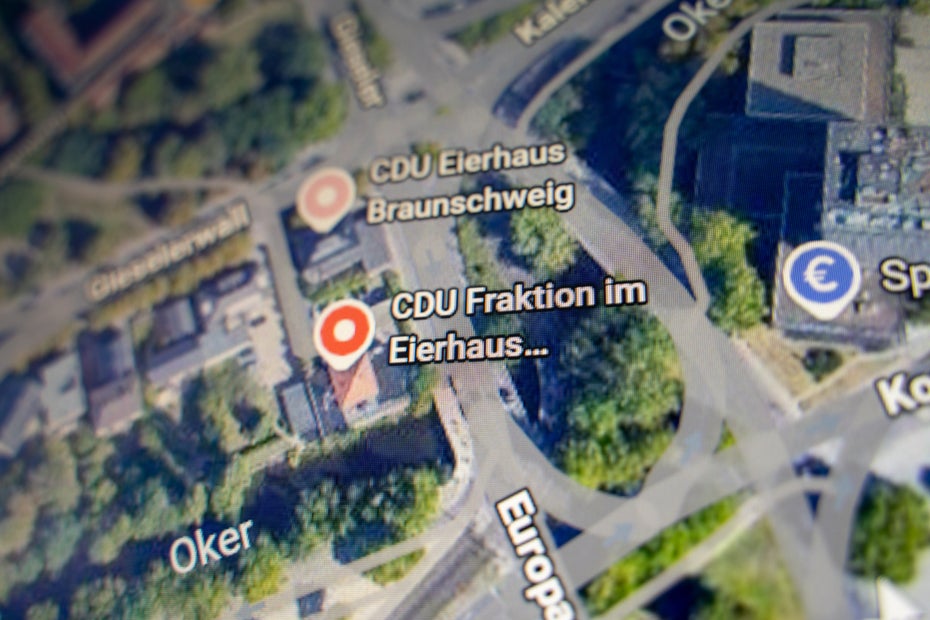
The digital landscape is a battleground of information, and sometimes, a stage for unexpected humor and political statements. One such incident recently put the spotlight on the accuracy and vulnerability of online mapping services, specifically Google Maps. Across Germany, numerous offices belonging to the Christian Democratic Union (CDU) and its Bavarian sister party, the Christian Social Union (CSU), mysteriously appeared under a new, rather whimsical name: "Eierhaus" – translating to "Egg House." This bizarre digital prank, affecting
google maps cdu listings nationwide, sparked curiosity, amusement, and a deeper conversation about online reputation and digital activism.
The phenomenon wasn't isolated to a single region; reports quickly emerged from various federal states, indicating a coordinated effort. While the exact motivations and perpetrators remained shrouded in mystery, the incident certainly highlighted how easily an organization's digital presence, especially on a widely used platform like Google Maps, can be altered, even if temporarily. For anyone searching for a CDU office, instead of finding the familiar political headquarters, they might have been directed to a seemingly innocuous, and utterly fictional, "Egg House." This particular episode underscores the dynamic nature of online information and the constant need for vigilance in managing an organization's digital footprint.
The Digital Vandalism Unpacked: A Nationwide Phenomenon
The "Eierhaus" designation wasn't a one-off error; it was a widespread digital alteration that affected numerous CDU and CSU offices. Reports confirm that multiple business locations across Brandenburg were among the first to show these peculiar changes. For instance, the state headquarters in Potsdam was listed as "CDU buntes Eierhaus – Landesverband Brandenburg" (CDU colorful Egg House – Brandenburg State Association). Other district associations, including Barnim, Cottbus, Potsdam-Mittelmark, and Oberspreewald-Lausitz, along with local offices in Schwarzheide and Spremberg, also temporarily bore the "Eierhaus" moniker. In one instance, a search result for Märkisch-Oderland even yielded the less festive, more critical name "CDU Schuldenfabrik Kreisverband Märkisch-Oderland" (CDU Debt Factory District Association Märkisch-Oderland).
The changes were not permanent, indicating Google's internal mechanisms or swift reporting by users and the party itself led to their correction. Initially, the markers on the map disappeared or reverted, with only a few locations like Schwarzheide and Oberspreewald-Lausitz retaining the "Eierhaus" tag for a brief period. Julian Brüning, the CDU General Secretary for Brandenburg, took the incident with a notable sense of humor. "We take it calmly," he remarked. "The entry will be corrected, and then we'll continue with our political work. A digital joke is quickly made – for the real challenges in Brandenburg, it takes a bit more substance." His measured response highlights the party's pragmatic approach to what was clearly an act of digital mischief rather than a serious threat. This kind of spontaneous digital protest is becoming increasingly common, as detailed further in
google maps cdu - Article 2.
Behind the "Eierhaus": Unmasking the Motives
While the identity of the perpetrators behind the "Eierhaus" prank on
google maps cdu listings remains officially unknown, media speculation quickly pointed towards a possible connection with recent political protests. One prominent theory links the incident to demonstrations by young people against the reintroduction of conscription in Germany. A specific event cited was a student protest against conscription in Berlin in early March, where an 18-year-old reportedly displayed a placard with the provocative slogan "Merz leck Eier" (Merz lick eggs), directed at CDU leader and federal chancellor candidate Friedrich Merz.
Following this demonstration, police initiated an investigation against the young man on suspicion of defamation. The timing and the specific "Eierhaus" renaming on Google Maps led many to believe that the digital prank was a symbolic, if less direct, continuation of this protest. The "egg" motif, therefore, wasn't random but a coded reference to the earlier, more explicit, protest against a prominent CDU figure and the party's stance on national service. This form of digital activism, where online platforms are used to express dissent or mock political figures, is a growing trend. It demonstrates how individuals or groups can leverage widely accessible tools like Google Maps to amplify their message, even if in a lighthearted or subversive manner. Such incidents showcase the evolving landscape of political engagement, moving beyond traditional forms of protest into the digital realm, which can sometimes blur the lines between humor and defamation.
The Broader Implications: Google Maps, Trust, and Digital Integrity
The "Eierhaus" incident is more than just a fleeting digital prank; it shines a light on the inherent vulnerabilities of user-generated content platforms like Google Maps. While Google strives to provide accurate and up-to-date information, it relies heavily on user contributions, feedback, and automated systems. This crowdsourced model, while powerful for its vastness and immediacy, also presents avenues for manipulation, whether intentional mischief or malicious intent. The brief transformation of
google maps cdu entries into "Eierhaus" locations illustrates how an organization's online presence, which is crucial for public interaction and brand perception, can be temporarily hijacked.
For businesses and political organizations alike, maintaining an accurate and consistent digital footprint is paramount. Misinformation, even if playful, can confuse the public, dilute brand messaging, or, in more severe cases, cause reputational damage. Google, for its part, affirmed its commitment to accuracy, stating it "strives to keep Google Maps as up-to-date as possible and to display correct information to users." They also emphasized that erroneous information can be reported using the platform's feedback button, a vital tool for users and businesses to self-police content. This incident serves as a stark reminder that while digital platforms offer unprecedented reach, they also demand constant vigilance and active management to ensure the integrity of the information presented. Exploring the dynamics of trust in online mapping further is important, and you can learn more by reading
google maps cdu - Article 3.
Protecting Your Digital Presence: Tips for Businesses and Organizations
In an age where a significant portion of public interaction and information gathering happens online, an organization's digital presence is as critical as its physical one. The "Eierhaus" saga offers valuable lessons for businesses, political parties, and any entity listed on platforms like Google Maps.
*
Claim and Verify Your Google My Business Profile: This is the foundational step. By claiming and verifying your Google My Business (GMB) listing, you establish official control over your information. This allows you to directly update details, add photos, respond to reviews, and, crucially, dispute incorrect edits or suggestions. Unverified listings are far more susceptible to unauthorized changes from external users.
*
Regularly Monitor Your Listings: Don't set it and forget it. Periodically check your Google Maps listing (and other relevant directories) to ensure all information – names, addresses, phone numbers, opening hours – is accurate. Automated tools or services can help monitor changes and alert you to potential issues.
*
Educate Your Team: Ensure that relevant staff members, especially those responsible for communications or digital marketing, understand how Google Maps works and the importance of maintaining accurate information. They should be aware of the feedback mechanism and how to report issues promptly.
*
Utilize the Feedback Mechanism: If you spot an error or an unauthorized change, don't hesitate to use Google's "Suggest an edit" or "Report a problem" feature. The faster an issue is reported, the quicker Google can review and rectify it. Encourage your community or supporters to do the same if they notice discrepancies.
*
Have a Digital Crisis Plan: Understand that digital pranks or malicious attacks can happen. Having a predefined plan for how to respond to such incidents – including who is responsible for monitoring, reporting, and communicating – can minimize potential damage and ensure a swift resolution. This should cover not just listing changes but also reputation management more broadly.
*
Engage with Your Online Community: A strong, positive online presence built through engagement with customers or constituents can help buffer against negative incidents. A loyal online community might even be your first line of defense in identifying and reporting inaccurate information.
By proactively managing your digital identity on platforms like Google Maps, organizations can safeguard their reputation, ensure accurate public information, and maintain trust with their audience, even in the face of digital mischief.
Conclusion: The Lasting Impact of a Digital Jest
The "Eierhaus" incident, where
google maps cdu listings were temporarily altered, stands as a quirky yet insightful case study in the intersection of digital platforms, political commentary, and online reputation management. While seemingly a harmless prank, it underscored the power of collective digital action and the potential for widely accessible tools to become stages for creative protest. For the CDU, it was a moment to display good humor and resilience, but for Google and other platform providers, it highlighted the ongoing challenge of balancing user contribution with data integrity. Ultimately, this digital jest serves as a clear reminder for all organizations: in an increasingly connected world, a robust and actively managed online presence is not just an advantage—it's a necessity. The incident reinforces the importance of vigilance, quick response, and a clear understanding of how information is curated and consumed in the digital age.